
















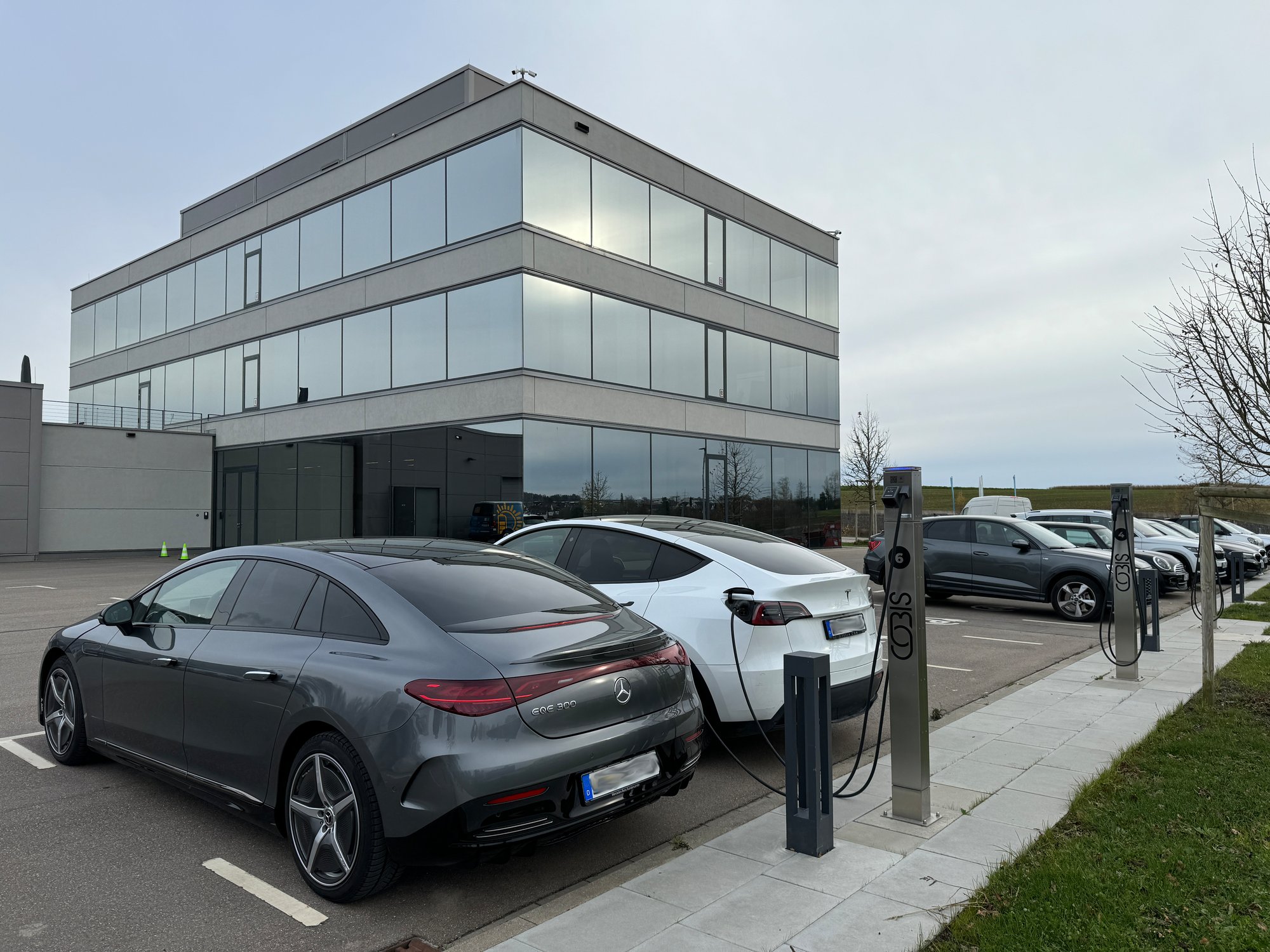
With its Blue Energy Concept, the COBIS GROUP is implementing a pioneering energy and space concept in Sindelfingen. At this location, the group combines the leasing of office properties and commercial space with a renewable, decentralized energy supply and sustainable e-mobility solutions for its customers.

Real Estate / Business Park Development with Energy Infrastructure
Commercial Real Estate / Industrial and Business Parks
“Our biggest challenges aren’t the individual technologies—that is, combined heat and power plants, solar power, compression systems, or wall boxes—on their own. As individual technologies, they work. But getting the whole system to work together—that’s the real art.”
Dr. Michael Zürn
Chair of the COBIS Advisory Board
COBIS already had a versatile energy infrastructure in place at its site, including photovoltaic systems, a combined heat and power (CHP) plant, wall boxes, and other energy consumers. Each of these technologies was already functioning well on its own.
The real challenge arose from increasing electrification: When many employees plug in their electric vehicles at the same time in the morning, this can lead to costly peak loads due to the simultaneous demand—unless an intelligent control system is in place. These peak loads strain the grid connection and result in unnecessarily high costs.
COBIS chose Enit because Enit act not only controls individual charging points but also intelligently manages the entire energy system at the site. The PV system, combined heat and power plant, consumers, unidirectional and bidirectional wallboxes, and vehicles capable of feeding power back into the grid are all considered together and optimized proactively. This allows existing flexibility to be leveraged, peak loads to be reduced, and charging processes to be managed cost-effectively—without treating the energy system as a standalone solution.
The success of COBIS can be measured primarily by increased site self-sufficiency and the resulting cost savings achieved through better utilization of the site’s own PV power. The Enit act optimizes charging and discharging processes so that vehicles are charged when they are needed, while ensuring that charging is as beneficial to the grid and as cost-efficient as possible. An analysis of grid consumption, self-consumption rates, and charging schedules demonstrates how well the existing infrastructure functions as a flexible energy system.
Electric cars can be more than just energy consumers in businesses: With bidirectional charging, they become flexible energy storage solutions. The good news is that this isn’t just a pipe dream—it’s already a reality for industrial companies with electric fleets.
In the BiFlex-Industrie research project, Enit demonstrates how vehicles capable of feeding power back into the grid can help make better use of PV electricity, reduce peak loads, and manage grid consumption more intelligently.