















en_catolet-reference-uwe-title_1920x1080

    CATOLET

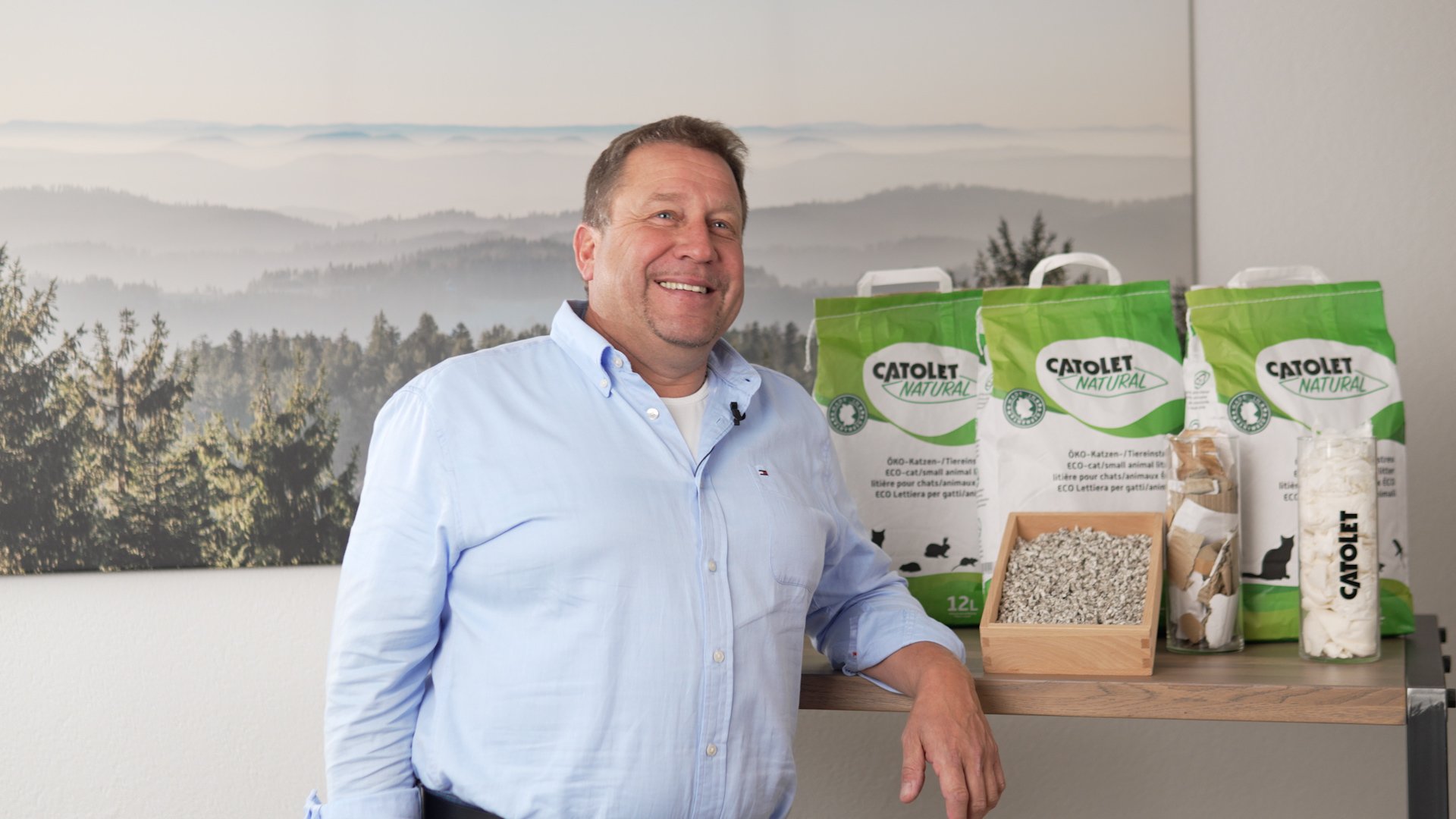
    CATOLET GmbH & Co. KG is a medium-sized family-owned business that has been based in Albbruck in the southern Black Forest for over 30 years. It is a pioneer in the production of eco-friendly cat litter and animal bedding—made exclusively from 100% recycled cellulose derived from hygiene and packaging waste. With this product line based entirely on secondary raw materials, CATOLET established itself early on as a sustainable market leader and has since consistently convinced consumers in both food retail and specialty stores of the benefits of eco-friendly litter.

    Industry

    Industries

    Pet Supplies

    Objective

    Target Industries

    Retail and Direct Marketing

    Employees

    Employees

    33 employees at the Albbruck plant

    PG-Proalpha-400x200

    Proalpha GmbH

    www.proalpha.com

    Factory

    Industries

    Industry 1, Industry 2, Industry 3

    Objective

    Target Industries

    Industry 1, Industry 2, Industry 3

    Team

    Employees

    Number

    en_catolet-reference-uwe-bernhard-pc_1080x1080

    “Without such a system, many measures would likely have been ineffective. [...] In this day and age, efficient management of operations is virtually impossible without such a system.”

    Bernhard Rohr
    Head of Quality Assurance

    Highlights

    Early Fault Detection

    Using the Enit agent, a fault in the reactive power compensation system was detected in time, thereby preventing potential additional costs.

    Identification of Savings Potential

    The analyses helped uncover even minor instances of excess consumption, such as a faulty thermostat (+2 kW). In addition, the database enabled the recovery of approximately €20,000 in electricity taxes.

    The Foundation for Informed Decisions

    The energy data helps CATOLET select suitable raw materials and make investments, such as purchasing new equipment to reduce energy consumption.

    What was the
    initial situation?

    Before the Enit agent was introduced, energy data from the meters was recorded using a single-user PC. However, the software offered only limited analysis capabilities, and hardware issues were not always detected in a timely manner.

    Why the decision
    Enit?

    With the implementation of the Enit agent, production management gained a powerful tool for improving efficiency. Using the energy monitoring system not only provides in-depth insights into energy efficiency but also allows for conclusions to be drawn about productive machine uptime. Analyzing the annual duration curves yields the number of productive operating hours. This represents a key metric for future product cost calculations.

    How can success
    be measured?

    • Avoiding high costs: e.g., by detecting a malfunction in reactive power compensation at an early stage.

    • Financial refunds: Electricity tax refunds through the use of Enit-agent data in energy audits.

    • Operational efficiency: Identifying idle times, malfunctions, or inefficient use of materials through analysis of consumption data.

    • Data-driven investment decisions: e.g., purchasing new tools for the shredder plant to reduce energy consumption.

    Enit Benefits

    Fully Integrated Instead of Extra Work

    Enit’s energy monitoring system integrates seamlessly into the existing infrastructure—no additional measurement technology (unless required for submetering), no duplicate data collection. The data is collected automatically in the background, enabling analyses, cost savings, and providing the basis for CO2 assessments.

    From Energy Consumption to Concrete Leverage Points

    A precise breakdown of energy and emissions data (e.g., IHU: 41% share of total consumption) yields optimization strategies that can be implemented immediately—ranging from the operating modes of individual machines to the composition of emulsions.

    Reliable Data for Credible Statements

    All results of the carbon footprint assessment are documented in an audit-proof manner, are verifiable, and provide the basis for well-founded sustainability communication—both internally and with customers.